Systems vs. Processes: Know the Difference Before You Add Another Rule
Ask This Before You Add Another Process When you feel the urge to create a new process, stop and ask: Is this strengthening the system — or patching a failure?

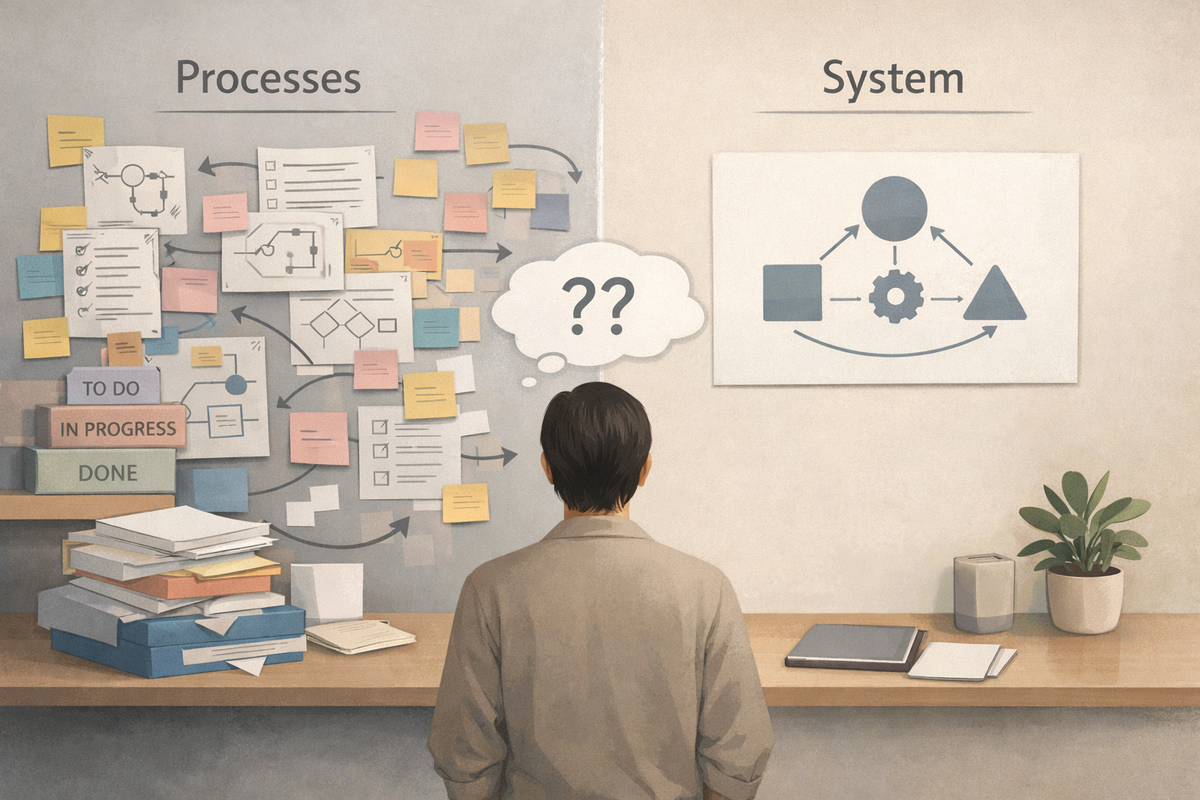
A system is a collection of processes working together to create a specific, repeatable outcome.
A process is the defined way a task gets done.
Simple enough, but this is where many businesses go wrong.
Why Processes Get Created (Most of the Time)
Processes rarely appear out of thin air.
Most are created because:
- Everyone is doing things their own way
- Steps are being skipped or done inconsistently
- Mistakes keep happening
- Someone isn’t doing their job correctly
- Quality or integrity is slipping
In other words, something broke.
So a process is added to “fix” it.
The Problem With Process Pile-On
Here’s the hard truth:
Not every new process belongs in your system.
Sometimes processes are added as:
- Band-aids for poor planning
- Workarounds for lack of training or knowledge
- Safeguards against employees cutting corners
- Controls to compensate for unclear expectations
And while those processes may work, they may also be hiding a deeper issue.
Ask This Before You Add Another Process
When you feel the urge to create a new process, stop and ask:
- Is this strengthening the system, or patching a failure?
- Does this solve the root problem, or just manage the symptoms?
- Are we protecting quality, or compensating for weak foundations?
If you’re creating processes solely to protect integrity, it’s time to evaluate from the bottom up.
Start at the Foundation
That means looking at:
- Planning
- Training
- Role clarity
- Accountability
- Expectations
- Incentives
You may find:
- The process is a smart improvement and absolutely needed
- Or… the process exists because something more fundamental isn’t working
The Real Goal
Strong businesses don’t rely on endless processes.
They rely on solid systems, where processes exist because they enhance the system, not because they’re trying to hold it together.
Sometimes the best fix isn’t another process.
It’s fixing what made the process necessary in the first place.