Can You Actually Make Money Reselling Thrift Store Finds? Here's the Truth After 30 Years
Can you really make money reselling thrift store finds? After nearly 30 years of buying and selling, here's the truth about what works, what doesn't, and why knowledge matters more than luck.

The short answer?
Yes.
The longer answer?
Yes, but most people quit because they underestimate the work involved.
I've been buying and selling thrift store finds for nearly 30 years. Long before reseller YouTube channels, TikTok thrift hauls, and "side hustle gurus" were telling everyone to quit their jobs and flip stuff for a living.
I've sold on eBay since the late 1990s, added Etsy, Shopify, antique booths, and a few other platforms along the way. I've watched trends come and go, categories rise and fall, and thrift stores change dramatically over the years.
And despite what many people believe, you can still make money reselling thrift store finds.
The Two Biggest Myths About Thrift Store Reselling
Let's start with the two myths I hear most often.
Myth #1: Everything Old Is Valuable
Nope.
Age alone doesn't create value.
I've seen people load carts with old items simply because they're old. Unfortunately, old doesn't always equal desirable.
Value comes from demand.
Some vintage items sell quickly because collectors want them. Others sit for months or years because nobody is looking for them.
One of the most important lessons I've learned is that you need to know what people are buying right now—not what was popular ten years ago.
Categories change constantly.
That's why research never stops.
Myth #2: Thrift Stores Are Picked Over
I hear this one all the time.
"There's nothing left."
"Goodwill puts everything online."
"Other resellers get there first."
I don't buy it.
In fact, I promise you this:
I can walk into any thrift store in America and find at least one item that will make me money.
Now, that doesn't mean I'll find a cart full of inventory every time. Some days I leave with a full cart. Other days I leave with just a handful of items.
But I always find something.
The difference isn't luck.
It's knowledge.
What a Real Day of Thrifting Looks Like
When I go thrifting, I usually hit three or four stores in a day.
I plan my route ahead of time so I'm not wasting time driving all over town. I start with my favorite store and work my way down the list. Ideally, the last stop is my least favorite in case I run out of time.
On average, I spend about $80 per store.
Some trips are incredible.
Some trips are just okay.
That's part of the business.
People often imagine resellers walking into a store and instantly finding a rare collectible worth thousands of dollars.
The reality is much less glamorous.
Most successful resellers are consistently finding small wins that add up over time.
Some of My Favorite Flips
Not every profitable flip is a rare antique.
In fact, some of my favorite sales came from ordinary items that other shoppers completely overlooked.
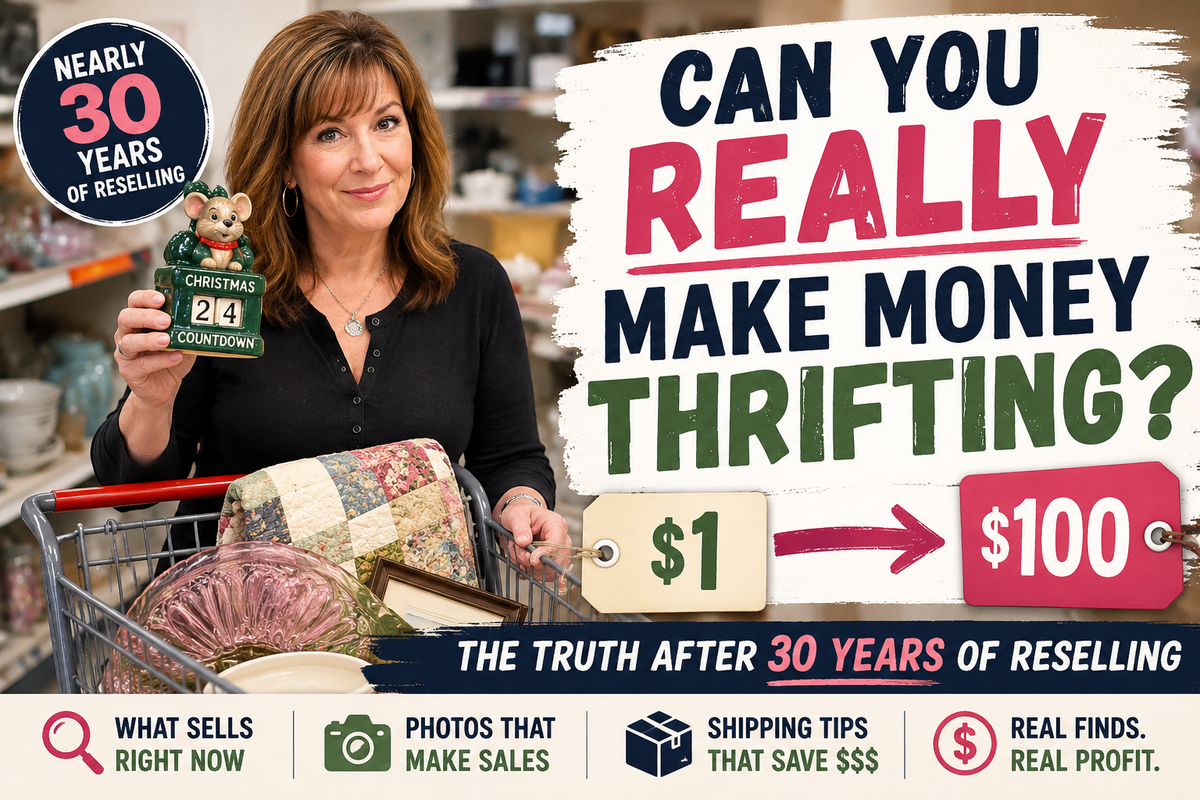
One example was an Avon Christmas Countdown decoration from the 1980s.
It was green and featured a little mouse that moved to count down the days until Christmas.
I paid $1 for it.
It sold for over $100 and sold quickly.
Another recent find was a small quilt.
Nothing fancy.
It was about twin-bed size and needed a good cleaning.
I paid $6 for it.
Less than a week later, it sold for $70.
I've also had great success with unique glassware, pottery, vintage holiday décor, and collectible dinnerware.
The key isn't finding expensive items.
The key is finding underpriced items.
The Money Is in the Knowledge
If I had to summarize almost 30 years of reselling into one sentence, it would be this:
The money isn't in the thrift store.
The money is in the knowledge.
When I first started, I focused heavily on glass and pottery.
There was a lot to learn.
I researched constantly.
I read books.
I followed people who knew more than I did.
I paid attention.
Eventually, I learned enough about a few brands to start making money consistently.
That's the advice I give every beginner today.
Don't try to learn everything.
Learn one or two categories.
Master those.
Then add another.
Then another.
Over time, you'll build enough knowledge that you won't have to research every single item you pick up.
That's when things start getting fun.
How Much Can You Actually Make?
This depends entirely on how much work you're willing to put in.
A casual weekend seller who lists a handful of items each week can easily make a few hundred dollars a month.
That's often enough to cover a car payment, utility bill, vacation fund, or holiday budget.
Someone treating it like a true part-time business can make significantly more.
The people who struggle are often the ones expecting fast money without doing the work.
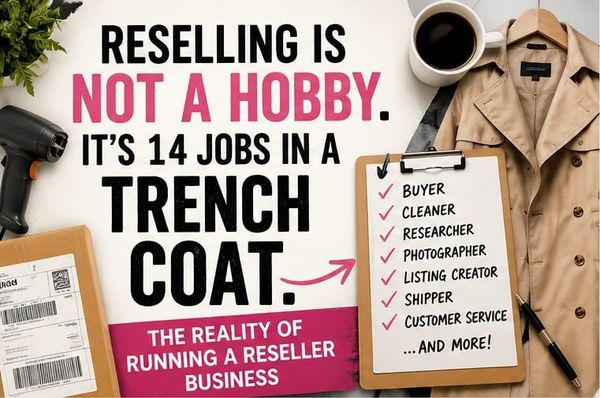
Buying is only part of the process.
You still have to:
- Research items
- Clean items
- Photograph items
- Write listings
- Pack orders
- Ship orders
- Handle customer questions
- Manage inventory
The treasure hunt is the fun part.
The business part is what actually makes money.
The Skills That Matter Most
If I had to rank the skills every reseller should learn, these would be near the top:
Research
This is the foundation.
Buying the wrong items at the wrong prices can sink a business quickly.
Research tells you what sells, what doesn't, and how much profit is available.
Photography
Bad photos cost money.
Blurry photos.
Dark photos.
Cluttered backgrounds.
Poor lighting.
All of these reduce buyer confidence.
Good photos help items sell faster and often for higher prices.
Shipping
Shipping isn't exciting, but it's important.
Knowing how to pack properly, choose the right box, and purchase the correct postage can dramatically impact profitability.
A great sale can quickly become a bad sale if shipping costs aren't managed properly.
What Would I Do With $100 Today?
If I had to start over tomorrow with just $100, I wouldn't chase expensive collectibles.
I'd focus on categories with low entry costs and strong demand.
My top choices would be:
- Clothing
- Shoes
- General household items
- Vintage holiday décor
Household items are inexpensive, plentiful, and often easy to ship.
Clothing and shoes require some research, but once you learn the brands, they can become reliable sellers.
And vintage holiday décor?
Halloween and Christmas sell year-round.
People collect it.
Decorate with it.
Gift it.
Display it.
If you buy it right, there's almost always a buyer waiting.
Final Thoughts
Can you actually make money reselling thrift store finds?
Absolutely.
But don't expect every trip to uncover hidden treasure.
Don't expect every old item to be valuable.
And don't expect success to happen overnight.
What does happen is this:
You learn.
You make mistakes.
You build knowledge.
You get better.
You recognize opportunities that other people walk right past.
And eventually, you'll find yourself standing in a thrift store, looking at an item everyone else ignored, knowing exactly why it's worth buying.
That's when reselling stops being luck and starts becoming a skill.